
XS3P18MB230
Inductive sensor XS3 M18 - 24..240VAC/DC - terminal
End of commercialisation End of commercialization date : June 30th 2020 End of service date : June 30th 2020
XS3P18MB230 is replaced by the following product:
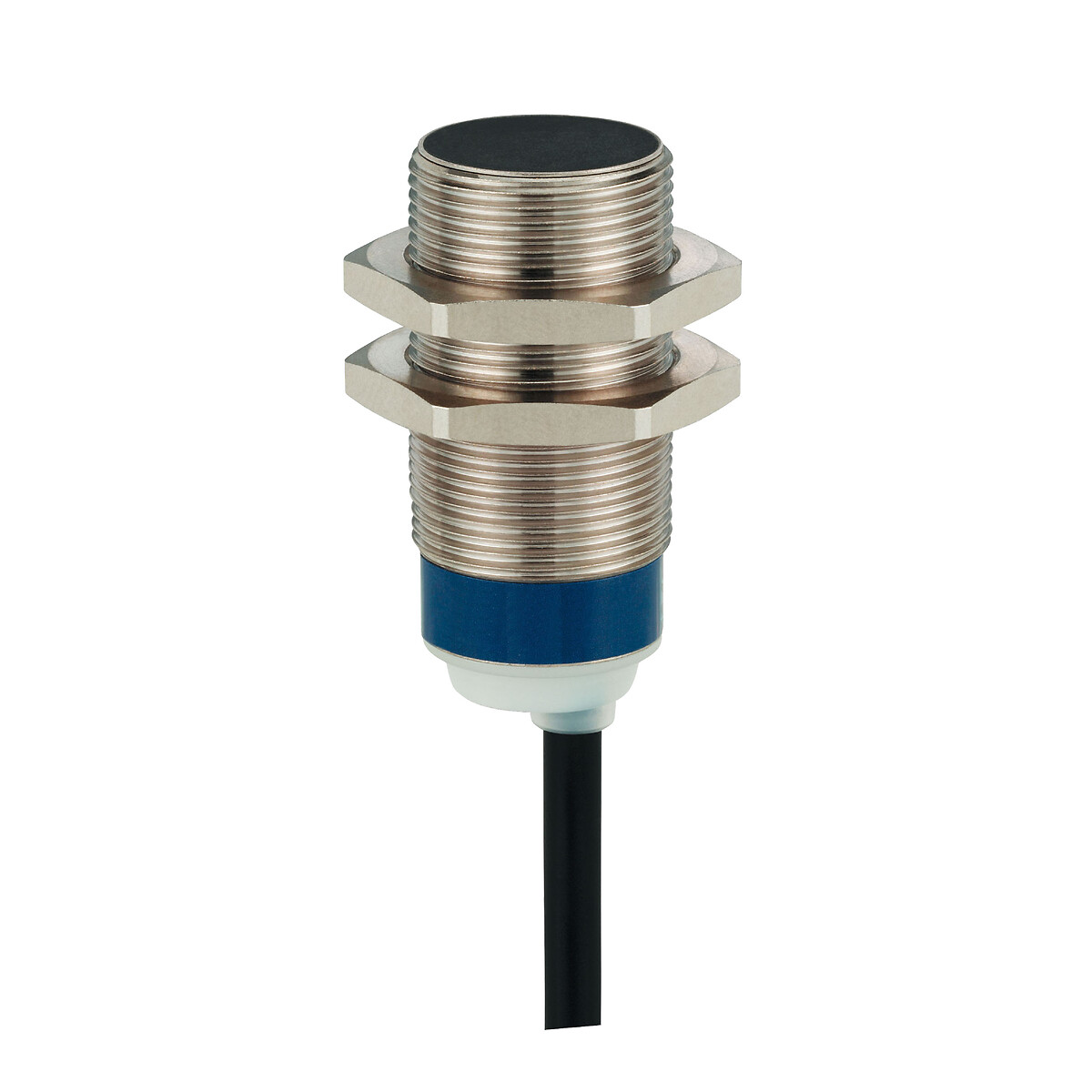
XS618B1MBL2
Inductive proximity sensors XS, inductive sensor XS6 M18, L62mm, brass, Sn8mm, 24...240VAC/DC, cable 2 m
Quantity : 1
Expand all
Datasheet
Range of product
Telemecanique Inductive proximity sensors XS
Series name
General purpose
Sensor type
Inductive proximity sensor
Wiring configuration
2-wire
Sensor name
XS3
Device application
2-wire DC short-circuit protection
Sensor design
Cylindrical M18
Protection type
Short-circuit protection multi voltage
Body type
Fixed
Type of output signal
Discrete
Wiring technique
2-wire
Discrete output function
1 NC
Detector flush mounting acceptance
Flush mountable
Material
Plastic
[Us] rated supply voltage
24...210 V DC, 24...240 V AC 50/60 Hz
Output circuit type
AC/DC
Switching capacity in mA
5...300 mA AC with overload and short-circuit protection, 5...200 mA DC with overload and short-circuit protection
Enclosure material
PPS
Detection face
Frontal
Thread type
M18 x 1
Front material
PPS
Differential travel
1...15 % of Sr
Cable composition
2 x 0.34 mm²
Residual current
1.5 mA open state
Wire insulation material
PVC
Voltage drop
<5.5 V (closed state)
Delay first up
70 MILLISECOND
Marking
CE
Product certifications
CCC
CSA
UL
CSA
UL
Vibration resistance
25 gn amplitude = +/- 2 mm (f = 10-55 Hz) conforming to IEC 60068-2-6
Shock resistance
50 gn for 11 ms conforming to IEC 60068-2-7
Unit type of package 1
PCE
Number of units in package 1
1
Package 1 height
4.2 CENTIMETER
Package 1 width
9.6 CENTIMETER
Package 1 length
13.2 CENTIMETER
Package 1 weight
95 GRAM
California proposition 65
WARNING: This product can expose you to chemicals including: Diisononyl phthalate (DINP), which is known to the State of California to cause cancer, and Di-isodecyl phthalate (DIDP), which is known to the State of California to cause birth defects or other reproductive harm. For more information go to www.P65Warnings.ca.gov
Back to top
